Frequently Asked Questions
Is the red liquid in a steak package actually blood?
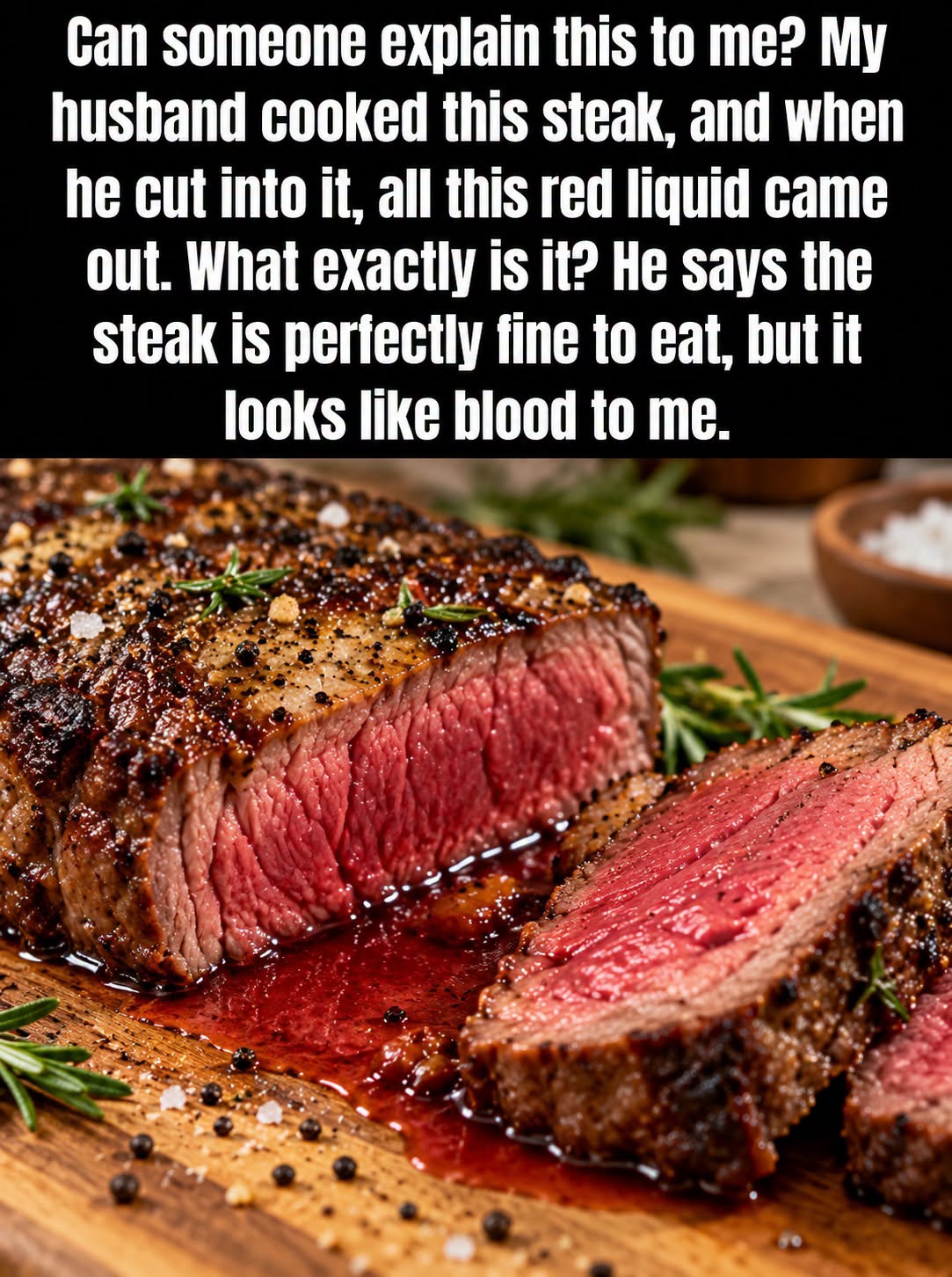
Usually, no. The liquid largely consists of water released from muscle along with myoglobin and other muscle components. Myoglobin gives meat much of its characteristic red color, which makes the liquid resemble blood.
Why does some packaged beef have more red liquid than other beef?
The amount can vary because of the cut, storage conditions, processing, temperature changes, freezing, thawing, and the muscle’s ability to retain water. Therefore, two packages of similar meat can contain different amounts of liquid.
Does brown beef mean the meat has spoiled?
Not necessarily. USDA explains that chemical changes in myoglobin can turn beef brown even when spoilage has not occurred. However, an off odor or sticky, tacky, or slimy texture can indicate spoilage.
Should I rinse the red liquid off raw meat?
No. USDA advises against washing raw meat because splashing water can spread bacteria around your kitchen. If needed for cooking, carefully pat excess surface moisture with a disposable paper towel instead.
Why is vacuum-packed beef sometimes purple?
Low-oxygen packaging changes the state of myoglobin. As a result, beef can have a dark purplish-red appearance inside vacuum packaging. Exposure to oxygen after opening can make the surface brighter red.
Conclusion
What is that red liquid in grocery store red meat packages? In most cases, calling it blood gives the wrong impression.
Muscle naturally contains a large amount of water. As some of that moisture leaves the meat during storage, processing, freezing, or thawing, it can carry myoglobin and other muscle components with it. Myoglobin provides the striking red color that makes the liquid resemble blood.
The same protein also helps explain why beef can appear purple, cherry red, or brown under different conditions.
Therefore, avoid judging meat safety from red liquid or color alone. Instead, consider storage temperature, storage time, package condition, odor, and texture.
Handle package juices carefully because raw meat can carry harmful microorganisms. Keep raw beef away from ready-to-eat foods, clean contaminated surfaces, and avoid rinsing raw meat under the faucet.
Finally, use a food thermometer when cooking. USDA recommends 145°F with a three-minute rest for whole cuts of beef and 160°F for ground beef.
Once you understand the role of water and myoglobin, that mysterious red puddle at the bottom of a meat package becomes much easier to explain.
