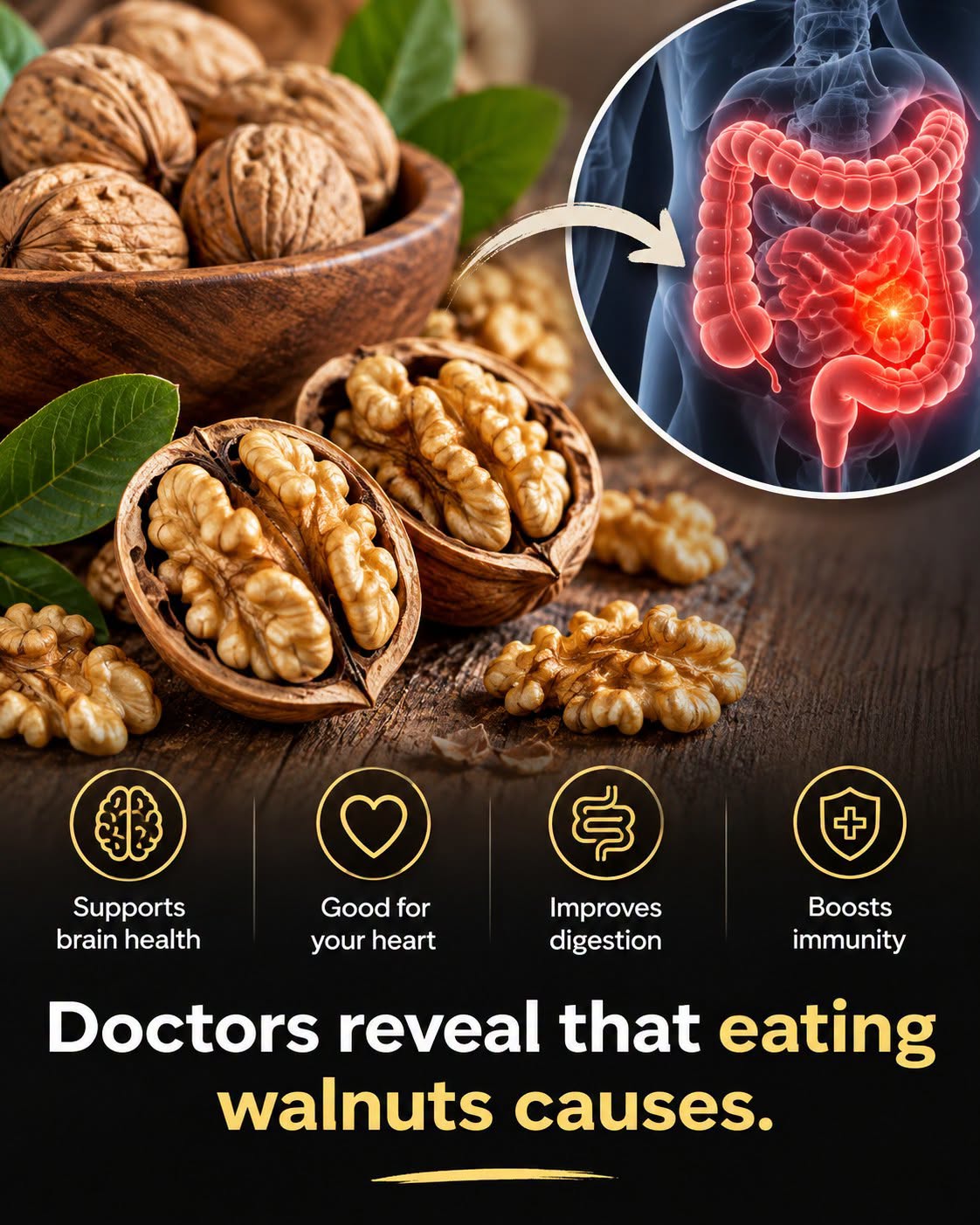
Doctors Reveal Why Walnuts Are Considered One of Nature’s Most Nutritious Foods because these familiar tree nuts pack an impressive range of nutrients into a small serving. Walnuts provide unsaturated fats, plant-based omega-3 fatty acids, protein, fiber, minerals, and antioxidant compounds. As a result, they can fit naturally into a balanced eating pattern.
You do not need to eat large amounts to enjoy them, either. A small handful can add crunch, richness, and valuable nutrients to breakfast, snacks, salads, and many other meals.
I started paying more attention to walnuts after keeping a small container near the oatmeal and breakfast foods. Before that, they usually stayed forgotten in the pantry until a baking recipe called for them. Once they became easy to reach, adding a few to yogurt, oatmeal, or fruit felt effortless. What surprised me most was how satisfying such a small portion could be. Instead of treating walnuts as something reserved for desserts, I began seeing them as an everyday food. That simple change also made it easier to add more variety to meals without completely changing what I already enjoyed eating.
Of course, walnuts do not act like medicine, and no single food can guarantee good health. However, their nutrient profile helps explain why they regularly appear in discussions about heart-friendly and nutrient-rich eating patterns.
Why Walnuts Pack So Much Nutrition
Healthy Fats Make Walnuts Stand Out
Walnuts contain a substantial amount of fat, but that fact alone does not make them unhealthy. Instead, much of their fat comes from polyunsaturated and monounsaturated fatty acids.
In particular, walnuts stand out among commonly eaten nuts because they provide alpha-linolenic acid, or ALA. ALA is an essential plant-based omega-3 fatty acid. Since the human body cannot produce it on its own, people need to obtain it through food.
A standard one-ounce serving, or roughly 28 grams, provides a practical way to include these fats without eating a large portion. That amount equals approximately one small handful.
Healthy dietary fats perform several important jobs. For example, the body needs fat to absorb certain vitamins and support normal cell function. Additionally, fat can make meals more satisfying.
However, portion size still matters. Walnuts contain many calories in a relatively small amount of food. Therefore, adding a moderate portion to meals usually makes more sense than eating directly from a large bag without considering quantity.
Protein, Fiber, Vitamins, and Minerals Add More Value
Healthy fats represent only part of the walnut nutrition picture. Walnuts also supply plant protein and dietary fiber.
Protein contributes to the maintenance and repair of body tissues. Meanwhile, fiber supports normal digestive function and helps create a satisfying eating experience.
Walnuts also provide several important micronutrients. These include copper, manganese, magnesium, phosphorus, folate, and vitamin B6.
Copper contributes to several normal body processes, while manganese plays roles in metabolism and antioxidant defenses. Magnesium supports muscles, nerves, and many biochemical reactions.
Furthermore, walnuts contain naturally occurring plant compounds, including polyphenols. Researchers continue to study how these compounds interact with human health.
Therefore, calling walnuts nutrient-dense makes sense. A relatively small serving delivers several types of nutrients at once.
