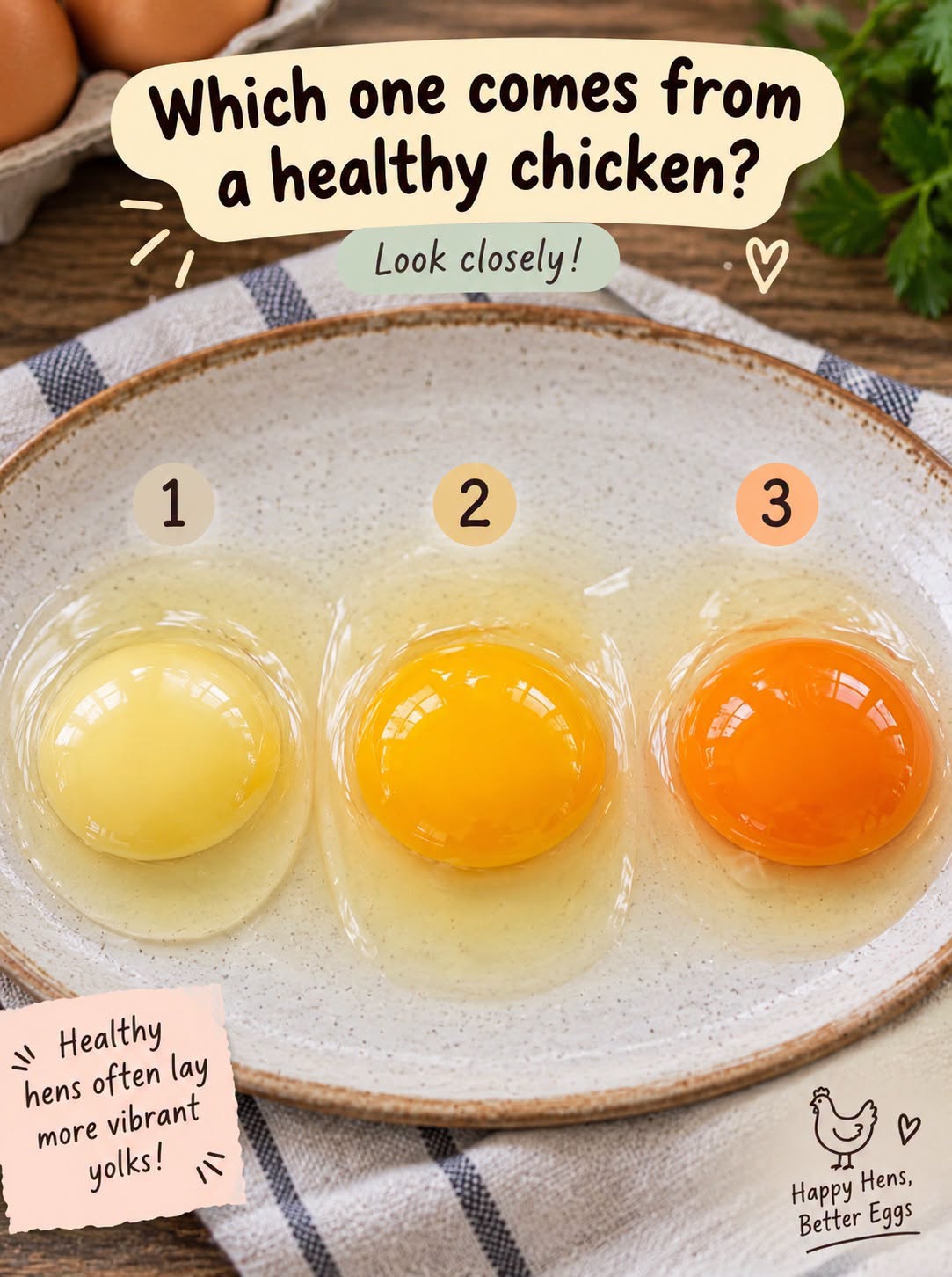
A chicken doesn’t create the color of an egg yolk randomly. Instead, pigments in the hen’s diet contribute strongly to the final shade.
Carotenoids include naturally occurring plant pigments associated with yellow, orange, and red colors. When hens consume feed containing these pigments, some of them reach the developing yolk.
As a result, changing the feed can change yolk color.
Ingredients such as corn can contribute yellow pigments. Other feed ingredients and plant materials can intensify golden or orange shades. Commercial producers can also formulate diets to produce particular yolk colors.
Therefore, a deep orange yolk can reveal something about pigment intake.
However, it cannot provide a complete menu of everything the hen ate.
Think of yolk color as one visible result of a complicated diet rather than a precise nutritional report.
This explains why eggs from different farms can look dramatically different after cracking even when both eggs remain completely normal.
It also explains why yolks from the same general production system do not always match perfectly.
Feed composition can vary. Hens that forage outdoors may also consume different plants and insects at different times.
Consequently, yolk color can change without signaling anything dangerous or unusual about the egg.
The important lesson from The Egg Yolk That Stopped Me in My Tracks is simple: impressive color gives you a clue about pigmentation in the hen’s diet, but it does not tell the egg’s entire story.
Pale Yellow Yolks Can Be Perfectly Normal
Deep orange yolks photograph beautifully, so they often receive more attention online. However, a pale yellow yolk does not automatically indicate an inferior egg.
A lighter yolk usually reflects lower concentrations or different combinations of pigments in the hen’s feed.
That difference can occur in completely healthy hens.
Therefore, rejecting an egg solely because its yolk appears pale makes little sense.
Color also does not provide a dependable measure of food safety. You should judge egg safety through proper storage, handling, shell condition, and cooking practices rather than yolk shade.
Likewise, an intensely colored yolk cannot guarantee freshness.
Egg freshness affects other characteristics more directly. As an egg ages, changes occur in the white and yolk structure. For example, a fresh egg commonly has a firmer, more prominent yolk and thicker albumen around it. Over time, the white generally becomes thinner and spreads farther when cracked.
Still, those visual clues have limitations.
When safety matters, proper refrigeration, package dates where applicable, clean handling, and appropriate cooking offer much more useful information.
So, if you crack an egg and see a pale lemon-yellow center, don’t assume something went wrong.
Likewise, don’t automatically treat a vivid orange yolk as proof of superior quality.
Both colors can appear in normal eggs.
Does a Dark Orange Yolk Mean Better Nutrition?
Color Alone Cannot Rank an Egg’s Nutritional Value
One of the easiest assumptions to make about The Egg Yolk That Stopped Me in My Tracks is that its deep orange color must indicate substantially better nutrition.
Reality is more complicated.
Eggs naturally provide protein, fat, vitamins, minerals, and other nutrients. However, yolk color alone does not function as a nutritional rating system.
Diet can influence both color and certain nutrients, but those changes don’t always happen together in a predictable way.
For example, producers can feed hens diets specifically formulated to increase omega-3 fatty acids in their eggs. However, you cannot reliably identify the omega-3 content simply by comparing yolk colors.
Similarly, two yolks with similar orange shades could come from hens that consumed different diets.
A darker yolk may contain greater amounts of certain pigments, including carotenoids, depending on the feed. Yet that does not automatically make every other nutrient higher.
Therefore, consumers should use nutrition information and trustworthy product labeling when looking for specific nutritional characteristics.
The appearance can still tell you something interesting.
A rich golden-orange shade indicates that pigment reached the yolk during its formation. However, that information alone cannot tell you the egg’s exact vitamin, mineral, protein, or fatty-acid content.
In other words, enjoy that beautiful orange color.
Just don’t turn it into a nutritional scorecard.
Feed Can Change More Than Appearance
Although color doesn’t tell the entire nutritional story, a hen’s diet does matter.
Farmers can modify feed to influence certain characteristics of eggs. Omega-3-enriched eggs offer a familiar example. Hens receive specially formulated diets that increase particular fatty acids in the eggs they produce.
Similarly, carotenoid-rich feed can influence yolk pigmentation.
However, those two effects demonstrate why judging eggs only by appearance can become misleading.
A feed formula could create a strongly colored yolk without producing the particular nutritional characteristic a shopper wants. Conversely, an egg formulated to contain more of a specific nutrient does not necessarily need the darkest yolk in the carton.
Genetics, age, production conditions, and feed composition can also influence egg characteristics.
Therefore, read the carton when you want specific information.
If you want omega-3-enriched eggs, look for that information rather than searching for the deepest orange yolks. Likewise, if animal housing practices matter to you, examine the relevant production labels instead of guessing from yolk appearance.
That approach separates visible characteristics from claims that require additional evidence.
The deep orange yolk can still make breakfast look especially appetizing. Many people also associate richer yolk color with traditional farm eggs.
However, appearance and nutritional composition remain two related but distinct subjects.
Can Yolk Color Tell You How a Hen Was Raised?
Orange Yolks Don’t Automatically Mean Pasture-Raised
This is perhaps the biggest misconception surrounding The Egg Yolk That Stopped Me in My Tracks.
People often associate deep orange yolks with chickens wandering through green pastures, eating plants and insects under the sun.
That can happen.
A foraging hen may consume vegetation, insects, and other foods that contribute pigments to the yolk. Therefore, some pasture-based systems can produce richly colored yolks.
However, color does not prove that a hen lived on pasture.
Feed alone can strongly influence pigmentation. A hen can consume a formulated diet containing pigment-rich ingredients and produce an orange yolk without obtaining those pigments by roaming through a field.
Likewise, a pasture-raised hen does not automatically produce the darkest possible yolk every day.
Seasonal conditions matter. Available plants change throughout the year. Weather affects vegetation. Individual hens forage differently. Supplemental feed also contributes to their diets.
Consequently, you cannot crack an egg and reliably determine the hen’s housing system.
The yolk offers clues about pigments.
The carton provides information about production claims.
Keeping those two things separate prevents a common mistake: using color as evidence for an animal-welfare or farming claim that color alone cannot establish.
A gorgeous orange yolk remains gorgeous regardless.
It simply doesn’t function as a certificate of how the hen lived.
Egg Labels Tell You More Than Yolk Color
If you care about how hens were raised, product labels provide more relevant information than the shade inside the shell.
Terms such as cage-free, free-range, organic, and pasture-raised refer to different production practices or standards, although the exact requirements can depend on the certification program and jurisdiction.
Therefore, don’t assume those terms mean the same thing.
Additionally, shell color doesn’t solve the mystery.
Brown eggs aren’t inherently more natural or nutritious than white eggs simply because of shell color. A hen’s genetics largely determine whether she lays white, brown, blue, greenish, or other colored shells.
Similarly, yolk color has its own set of influences.
Once you separate shell color, yolk color, nutrition, and production method, egg shopping becomes much easier to understand.
You can choose eggs according to what matters most to you rather than relying on visual myths.
For instance, you might prioritize a specific farming standard. Another shopper may focus on price. Someone else might want enriched eggs because of their nutritional composition.
Meanwhile, another person may simply prefer intensely colored yolks because they look beautiful in fried eggs, pasta, or baked goods.
Those preferences can all exist without turning yolk color into a universal measure of quality.
