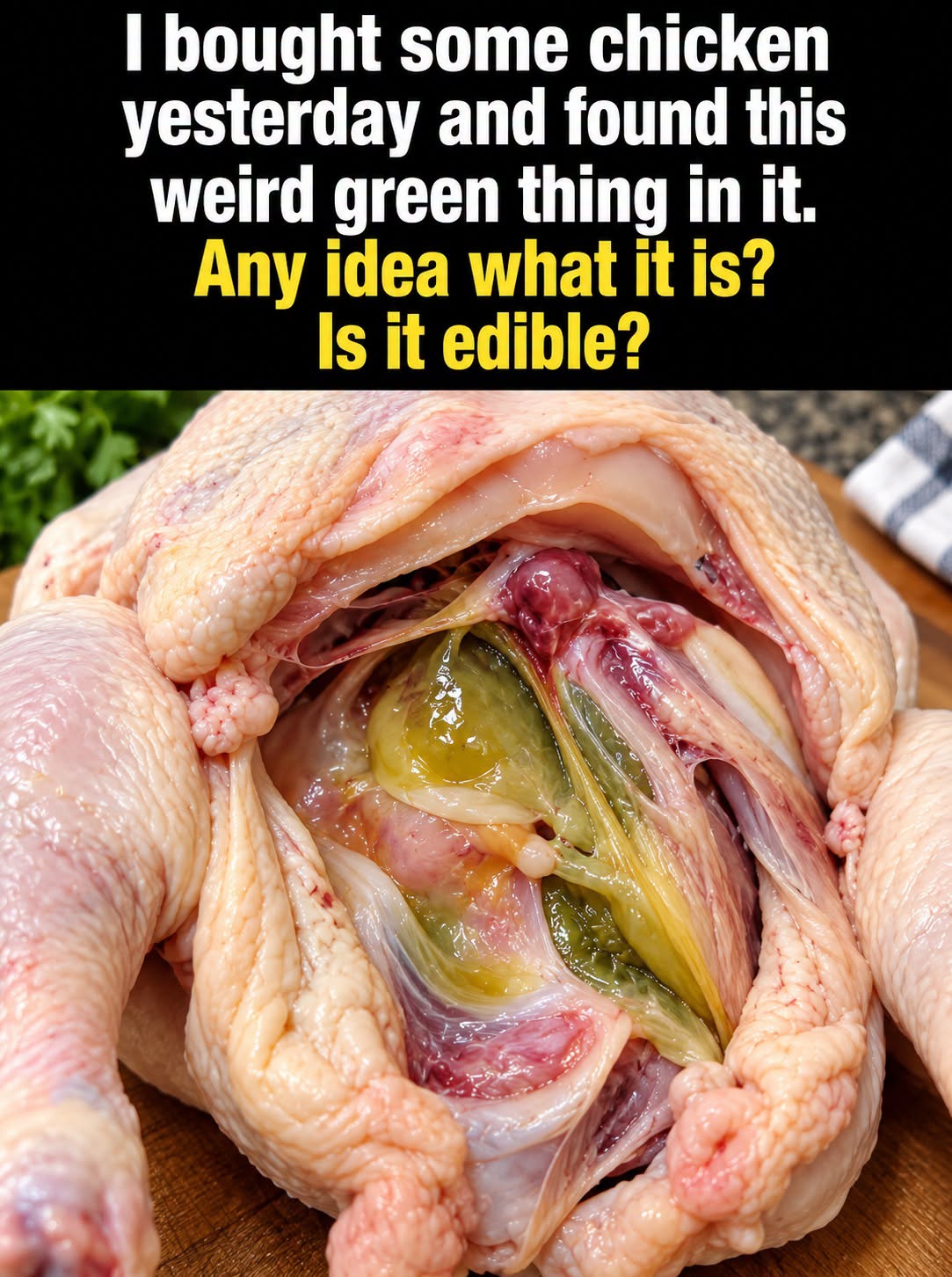
One of the clearest explanations for localized green chicken breast meat is deep pectoral myopathy, commonly called green muscle disease. The condition primarily affects the deep pectoral muscle, sometimes called the breast tender.
This muscle sits beneath the larger breast muscle. Consequently, you may see nothing unusual from the outside. The discoloration can remain hidden until the chicken gets deboned or sliced.
Deep pectoral myopathy develops when blood flow to this muscle becomes severely restricted. Without an adequate blood supply, the muscle lacks oxygen. As a result, localized muscle tissue becomes damaged and eventually dies.
Mississippi State University Extension describes the condition as necrosis and atrophy of the deep pectoral muscle. The affected tissue changes appearance as the process develops. Initially, damaged muscle can look unusually red. Later, it may resemble a bruise. Eventually, the breakdown of muscle pigments can produce the distinctive green color.
ease does not mean that green material somehow entered the chicken. Instead, the color develops inside damaged muscle tissue.
The location also provides an important clue. Deep pectoral myopathy tends to affect a defined portion of the deep breast muscle rather than creating a random green coating over the entire chicken.
Why the Muscle Turns Green
The dramatic color develops gradually.
After blood circulation becomes restricted, the affected tissue experiences oxygen deprivation. Tissue damage then progresses, while pigments in the muscle begin breaking down. According to Mississippi State University Extension, the characteristic green color results from the gradual breakdown of hemoglobin and myoglobin in the damaged muscle.
The process does not happen instantly. Shortly after the original injury, the muscle can appear red and may show hemorrhaging. Over the following days, it can develop a bruised appearance. After a week or more, the characteristic green color may become apparent.
Therefore, the appearance can vary considerably. One piece might contain a muted gray-green area, while another could show a much darker green section.
The texture can also differ from ordinary chicken. USDA describes affected tissue as becoming fibrous during the process.
That combination of a localized green color and altered texture can look unpleasant. However, appearance alone does not establish that microorganisms caused the change.
In fact, this distinction becomes especially important because discoloration can have several causes.
What Causes Green Muscle Disease in Chickens?
Restricted Blood Flow to Breast Muscle
The basic mechanism behind green muscle disease involves restricted circulation.
Chickens use their pectoral muscles when moving their wings. During vigorous wing activity, those muscles need additional blood and oxygen. The deep pectoral muscle can swell as circulation increases.
However, this muscle sits in a confined anatomical space between the sternum and a tough surrounding membrane. Therefore, it cannot expand freely.
Mississippi State University Extension explains that increased pressure inside the tender can restrict or stop its blood supply. The resulting oxygen shortage then causes localized tissue death.
Wing flapping plays an important role because vigorous muscle contraction increases the demand for circulation. Researchers and poultry specialists have associated increased activity with the development of the condition.
Several situations can encourage wing flapping. For example, sudden disturbances, excessive noise, lighting changes, catching, handling, and other events that increase bird activity can contribute.
Importantly, the problem can remain hidden before processing. A chicken does not necessarily show an obvious external sign that one deep breast muscle has experienced localized damage.
Consequently, the affected tissue may only become visible when someone debones or cuts the breast.
