Some manufacturers permit diluted vinegar or citric-acid solutions, while others recommend a commercial kettle descaler. Because appliance materials differ, follow the instructions supplied with your specific model.
After descaling, rinse the interior thoroughly. Then follow any manufacturer-recommended rinse or boiling procedure before preparing drinks again.
Never immerse the kettle, electrical base, cord, or plug in water unless the manufacturer explicitly designed the component for that purpose.
Likewise, avoid aggressive scraping with sharp metal objects. You could damage the interior surface or heating element.
The outside needs attention too. Once the kettle has cooled and you have unplugged it, wipe its exterior according to the manufacturer’s cleaning directions.
Regular care takes less effort than removing months of buildup. Therefore, make a quick interior inspection part of your normal kitchen routine.
Mistake 4: Using the Kettle Carelessly Around Electricity and Steam
Keep the Base, Cord, and Plug Dry
Water and electricity require careful separation.
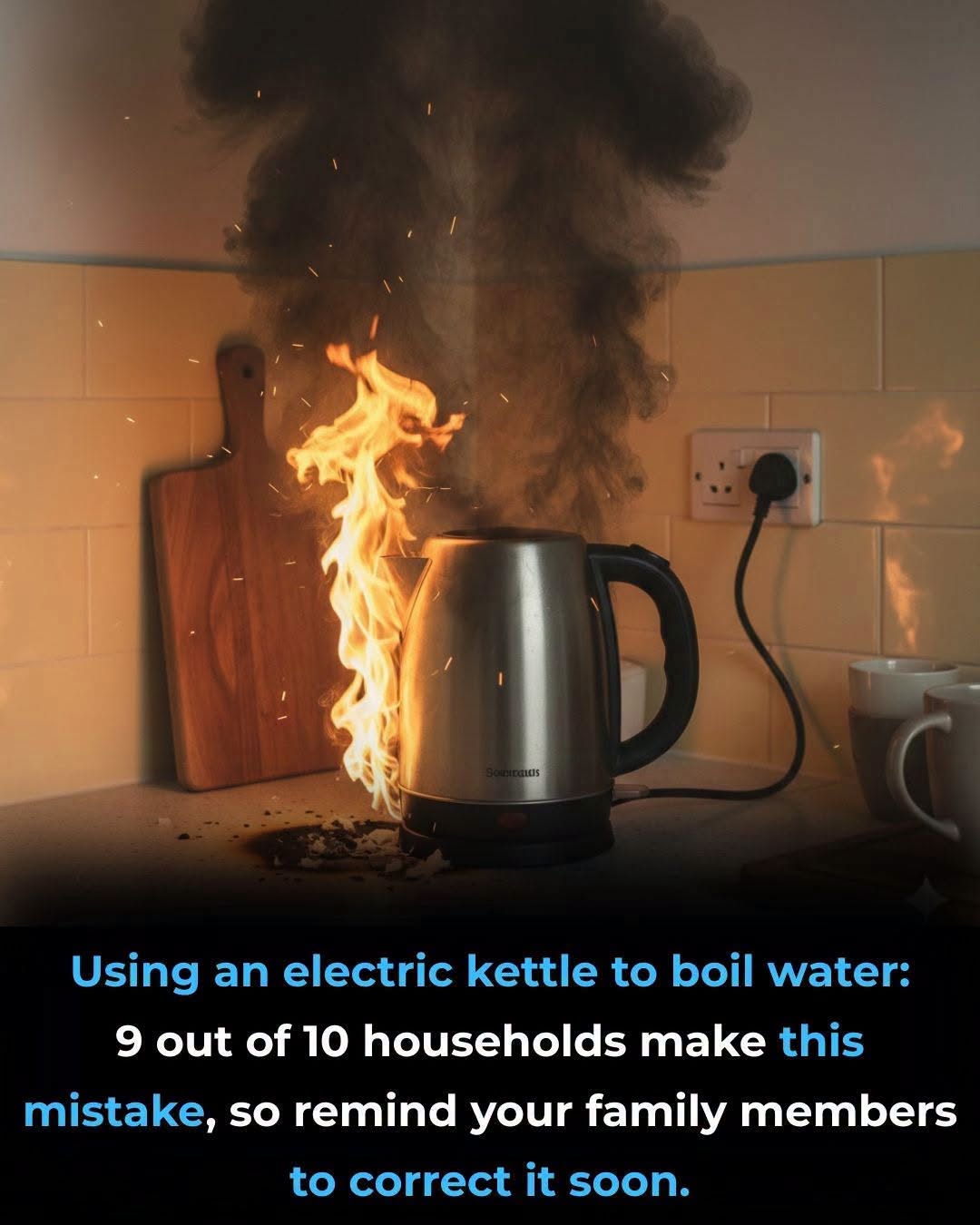
When using an electric kettle to boil water, remove the kettle from its powered base before filling it unless the manufacturer directs otherwise. This approach makes it easier to keep water away from electrical components.
After filling, check the kettle’s exterior. If you spilled water around the base or electrical connection, dry the area completely before reconnecting or operating the appliance.
Additionally, keep the cord away from hot burners, sharp edges, and places where someone can pull or trip over it.
Never use a kettle with a damaged plug or cord.
You should also avoid improvised electrical repairs. If an electrical component becomes damaged, follow the manufacturer’s service recommendations or replace the appliance when appropriate.
The kettle should sit on a stable, level, heat-resistant surface during operation. Therefore, avoid balancing it near the edge of a counter where a child, pet, or passing person could knock it over.
These precautions may sound basic. However, routine appliances often receive less attention precisely because people use them so frequently.
Respect Hot Water and Steam
An electric kettle can bring water to a very high temperature quickly. Consequently, burns remain one of the most obvious hazards.
Never position your hand or face directly over the spout while the kettle operates. Steam can cause painful burns even without direct contact with boiling water.
Likewise, open the lid carefully after boiling if you need to open it at all. Many kettles allow normal pouring without opening the lid.
When pouring, hold the handle securely and pour at a controlled pace.
Avoid filling the kettle beyond its maximum line because excessive water increases the possibility of boiling water escaping.
Additionally, keep a hot kettle away from young children. Position cords so children cannot grab them and pull the kettle down.
After boiling, remember that parts of the kettle may remain hot even after the automatic switch turns off.
Therefore, use the handle rather than touching the body of the kettle unless its design specifically provides cool-touch surfaces.
Mistake 5: Treating Every Electric Kettle the Same
Follow the Instructions for Your Specific Model
Electric kettles may look similar, but they do not all operate in exactly the same way.
Some contain exposed heating elements, while others use concealed elements. Some offer adjustable temperatures, keep-warm settings, filters, or specialized cleaning requirements.
Consequently, one universal maintenance method cannot replace the manufacturer’s manual.
This matters particularly when descaling.
A cleaning solution that works well for one kettle may not match another manufacturer’s recommendations. Likewise, minimum water levels, maximum capacities, filter maintenance, and safety procedures can differ.
Therefore, keep the manual or save a digital copy when you purchase a new kettle.
