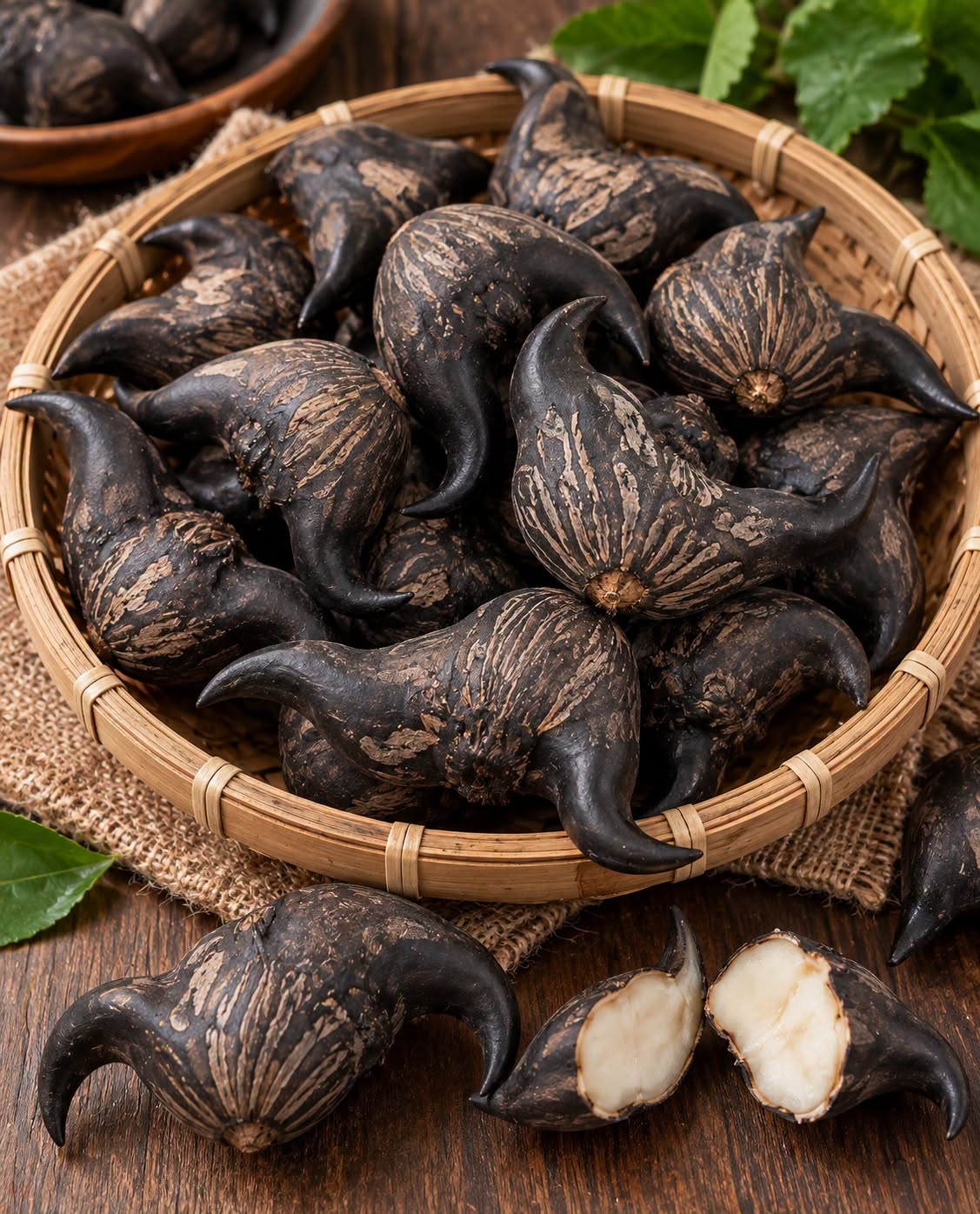
Their long history also explains why so many common names exist.
They Also Raise Environmental Questions in Some Regions
Not every water caltrop population is welcomed.
Some Trapa species can become invasive outside their native range.
Under favorable conditions, aquatic plants may spread quickly across ponds and waterways.
Dense growth can interfere with boating, fishing, swimming, and other recreation.
It can also block light from reaching native aquatic vegetation.
For this reason, some regions regulate certain water caltrop species.
That means growing them at home or releasing seeds into local waterways may be restricted.
If you receive live fruits or seeds, do not throw them into a pond, stream, lake, or drainage system.
Even food plants can create environmental problems when introduced into the wrong ecosystem.
Instead, follow local disposal guidance.
The same caution applies if you consider growing water caltrops yourself.
They require aquatic growing conditions and may fall under invasive-species rules.
Check local agricultural or environmental regulations before cultivation.
This environmental side of the story adds another layer to an already unusual food.
Water caltrops can be a traditional food, an agricultural crop, and an invasive aquatic plant depending on location.
Context determines which description applies.
Frequently Asked Questions
What are the strange black fruits with horns?
They are most likely water caltrops from the genus Trapa. Their hard dark shells and pointed projections give them a distinctive appearance.
Are water caltrops safe to eat?
Properly identified water caltrops from a reliable food source can be edible when prepared correctly. Because they grow in freshwater, thorough cooking is generally safer than eating them raw.
Are water caltrops the same as Chinese water chestnuts?
No. Chinese water chestnuts are underground corms from Eleocharis dulcis. Water caltrops are horned fruits produced by plants in the genus Trapa.
What do water caltrops taste like?
The cooked interior is usually mild, starchy, and slightly nutty or sweet. Its texture may remind some people of chestnuts or firm potatoes.
Should I eat water caltrops if I cannot confirm where they came from?
No. If you cannot confirm the identity, source, and intended use of an unfamiliar aquatic fruit, avoiding it is the safer choice.
Conclusion
My neighbor gave me these strange fruits, and their horned appearance may make them seem almost impossible to identify at first.
They are most likely water caltrops, aquatic fruits from plants in the genus Trapa.
Their hard dark shells protect a pale, starchy kernel that people have eaten in parts of Asia for generations.
However, their unusual appearance is not the only reason to handle them carefully.
Because they grow in freshwater environments, proper identification, washing, and thorough cooking matter.
They should not be treated like ordinary raw fruit.
You should also avoid eating fruits that smell bad, show visible mold, feel slimy, or come from an unknown source.
Remember that water caltrops are different from Chinese water chestnuts and ordinary tree chestnuts despite the confusing common names.
If someone hands you a bag, the best first step is simple: ask where they came from and how the giver normally prepares them.
Once properly identified and cooked, these strange horned fruits reveal something surprisingly ordinary inside—a mild, starchy food with a long culinary history.
Their appearance may be unusual, but that is exactly what makes water caltrops such an interesting reminder of how diverse traditional foods can be.
