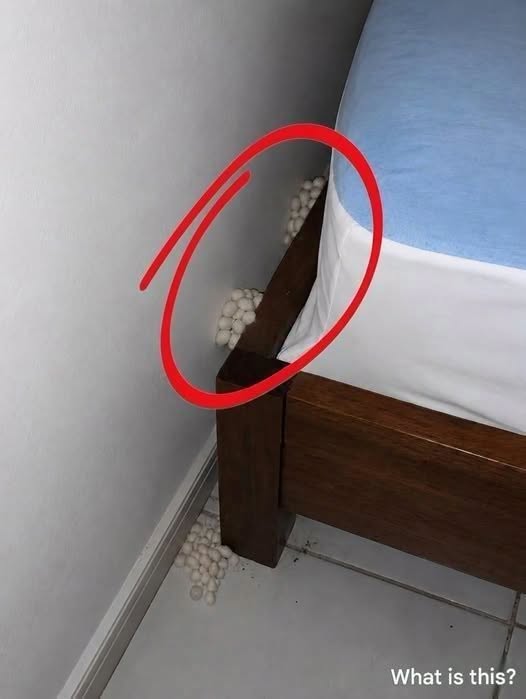
⚠️ Don’t Identify Mystery Eggs by Touching or Breaking Them
If you find unfamiliar eggs, cocoons, or capsules, avoid immediately crushing or opening them.
Instead:
- Take clear photographs from several angles.
- Place a familiar object such as a coin nearby for scale without disturbing the objects.
- Note their approximate size, color, texture, number, and location.
- Look for insects, lizards, droppings, webbing, moisture, or other clues nearby.
- If identification remains uncertain, show the photographs to a local pest professional, wildlife specialist, or knowledgeable extension service.
A close-up photograph is often far more useful for identification than a description like “small white eggs.”
🦎 If They Really Are Gecko Eggs
House geckos are generally harmless to people and are often beneficial because they eat insects such as moths, flies, mosquitoes, and other small arthropods.
If eggs are confirmed as belonging to a harmless native species, you may choose to leave them undisturbed.
If they need to be moved, however, don’t automatically pick them up and rotate them. Reptile eggs can be more sensitive to movement after development has begun than bird eggs.
Contacting a local wildlife professional is the safest approach when you’re unsure about the species or appropriate handling.
🧹 Preventing More Surprise Visitors
If you’d rather not discover another mystery nursery beneath your furniture, focus on preventing animals from entering rather than spraying chemicals unnecessarily.
Check for:
- Gaps around windows
- Openings beneath doors
- Torn window screens
- Cracks around pipes
- Gaps around air-conditioning units
- Wall or ceiling openings
Reducing indoor insect populations can also make the house less attractive to insect-eating geckos.
Regularly vacuuming underneath beds and furniture makes it less likely that any animal will find a completely undisturbed nesting location.
One Important Correction About Gecko Eggs
It’s tempting to assume that every chalky white object found indoors is a gecko egg.
It isn’t.
Appearance and location can suggest an identification, but they cannot confirm it.
Egg size, shell texture, shape, geographic location, and the animals commonly found around the home all matter.
That’s why a clear photograph—with something included for scale—is usually the best next step.
The Bottom Line
Small, white, chalky oval objects discovered beneath furniture could be gecko or small-lizard eggs, particularly in regions where house geckos commonly live indoors.
But they could also be insect cases or something unrelated to eggs altogether.
The best response isn’t panic—and it isn’t immediately reaching for insecticide.
Photograph them, examine the surrounding clues, avoid unnecessary handling, and identify them before deciding what to do.
Sometimes the strange little objects hiding beneath the bed aren’t evidence of a dangerous infestation at all.
They may simply reveal that a tiny, unexpected neighbor found the same quiet corner of your home appealing that you did.
