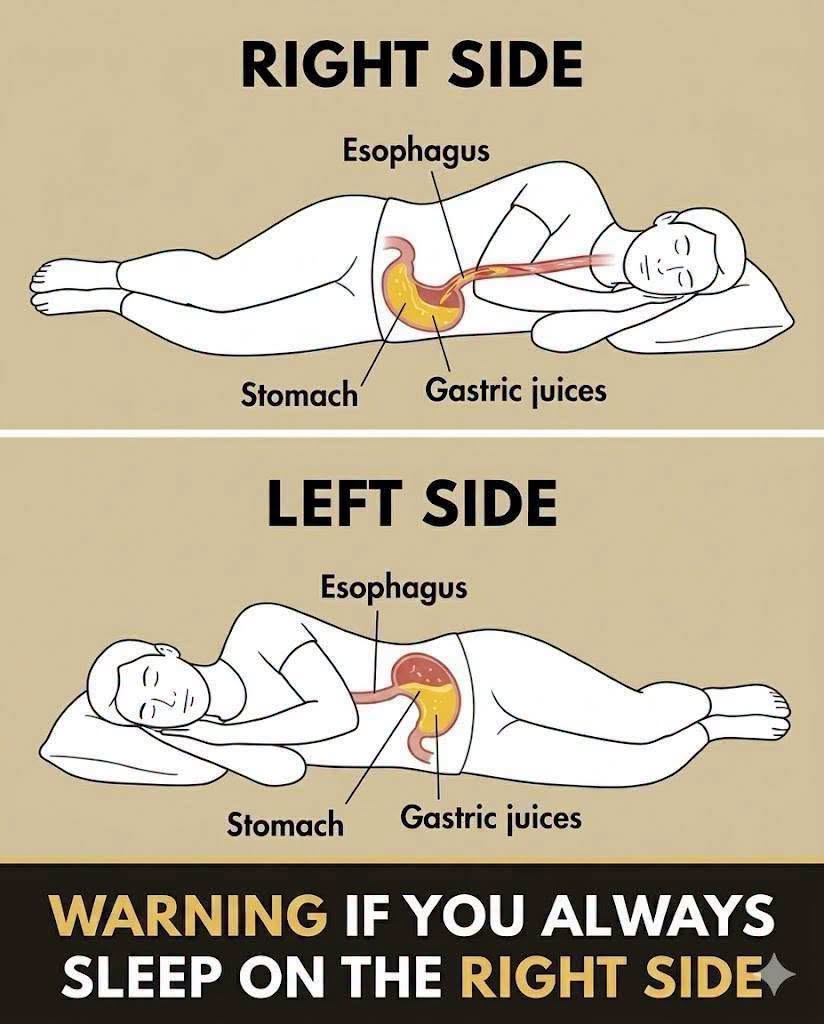
While you sleep, your body continues to perform countless essential functions, including digestion, circulation, breathing, and waste removal. Gravity still plays a role, meaning the position you sleep in can influence how these processes occur.
Different sleeping positions may affect:
- Acid reflux symptoms
- Snoring and sleep apnea
- Spinal alignment
- Blood circulation
- Pregnancy comfort
- Pressure on joints and muscles
The ideal sleeping position depends largely on your individual health needs rather than one position being universally “best.”
Right Side vs. Left Side: What’s the Difference?
Digestion and Acid Reflux
One of the best-studied differences between side-sleeping positions involves gastroesophageal reflux disease (GERD).
Research suggests that sleeping on the left side may help reduce nighttime acid reflux because of the natural shape and position of the stomach and esophagus. Gravity makes it less likely for stomach contents to flow back into the esophagus.
By contrast, sleeping on the right side may allow stomach acid to reach the esophagus more easily in some people, potentially worsening symptoms such as:
- Heartburn
- Sour taste in the mouth
- Chest discomfort
- Nighttime coughing
If you frequently experience acid reflux, switching to your left side may provide relief in addition to following your healthcare provider’s recommendations.
What About Heart Health?
Some people have heard that sleeping on the left side is always better for the heart.
The reality is more nuanced.
For healthy individuals, there is little evidence that sleeping on the right side harms heart function.
However, some studies suggest that people with certain heart conditions may feel more comfortable on one side than the other. Individual responses vary, and recommendations should always come from a healthcare professional familiar with the person’s medical history.
There is currently no evidence that sleeping on the right side alone causes heart disease.
Pregnancy and Left-Side Sleeping
During pregnancy, especially in the later months, healthcare providers often recommend sleeping on the left side.
This position may:
- Improve blood flow to the uterus.
- Reduce pressure on major blood vessels.
- Support kidney function.
- Help decrease swelling in the legs and feet.
That said, current obstetric guidance also reassures pregnant women that waking up on the right side or back occasionally is common and generally not a cause for concern. The most important thing is getting adequate, comfortable sleep.
